
Joseph Sakran, M.D., M.P.H., M.P.A.
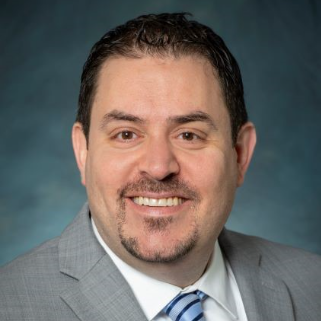
Fellowship Profile
Biography
Dr. Sakran is a trailblazer and nationally respected voice in the firearm injury prevention
movement. He is the Executive Vice Chair of Surgery, Director of Clinical Operations, and Associate Professor of Surgery and Nursing at Johns Hopkins Medicine in Baltimore.
Maryland. As a survivor of firearm-related violence, he was motivated to become a surgeon,
researcher, and advocate in firearm injury prevention. At every turn of his career, he has used his
experience and substantial skills to push a new frontier, primarily in serving
marginalized communities in the United States. The Academy Health recognized his research on
firearm-related injury with the Outstanding Article of the Year Award. Dr. Sakran guided historic legislation and guided historic legislation and was a
National Academy of Medicine Robert Wood Johnson Health Policy Fellow in the U.S. Senate
during the COVID-19 pandemic. As a Senior Fellow at the Satcher
Health Leadership Institute, Dr. Sakran was instrumental in creating the Health Equity
Tracker. In 2019, Dr. Sakran was named a Presidential Leadership Scholar, and he furthered
His research on safe gun storage. He was also a 2020 recipient of Johns Hopkins' Catalyst Award
for his pioneering research on physicians' role in educating patients on safe gun storage. He
serves as the Chair and Chief Medical Officer of the board of Brady United. Joe was
instrumental in shepherding the legislation that led to the passage of the first federal firearm
injury prevention legislation in nearly 30 years, the Bipartisan Safer Communities Act. Dr.
Sakran laid the foundation for creating the White House Office of
President Biden launched Gun Violence Prevention in September 2023. He has
demonstrated & trained healthcare professionals on how to communicate the data effectively &
science to drive social change. He has testified before the U.S. Congress and other Federal and State
agencies on Firearm injury prevention. Most recently, he was elected to the National Academy
of Medicine for his innovative work and exceptional leadership in firearm injury prevention,
which has been instrumental in establishing the urgency and intellectual foundation to drive
research and evidence-based policy change at the local, state, and federal levels.